Products
Stationary Crushers
Mobile Crushers
Solutions
Blog
Request a Quote

This article addresses the common issue of bearing damage in circular vibrating screens, a crucial piece of equipment in various industries. Improper bearing selection, incorrect fit tolerances, inadequate lubrication and sealing, and neglecting shaft thermal expansion are identified as key causes. Solutions include choosing the right bearing type (cylindrical or spherical roller bearings), ensuring proper fit tolerances, adopting thin oil lubrication systems, and designing for shaft thermal expansion. These measures can significantly reduce the risk of bearing failure and extend the equipment’s lifespan. For further assistance, consulting with experts like those at Dingbo Heavy Industry is recommended.
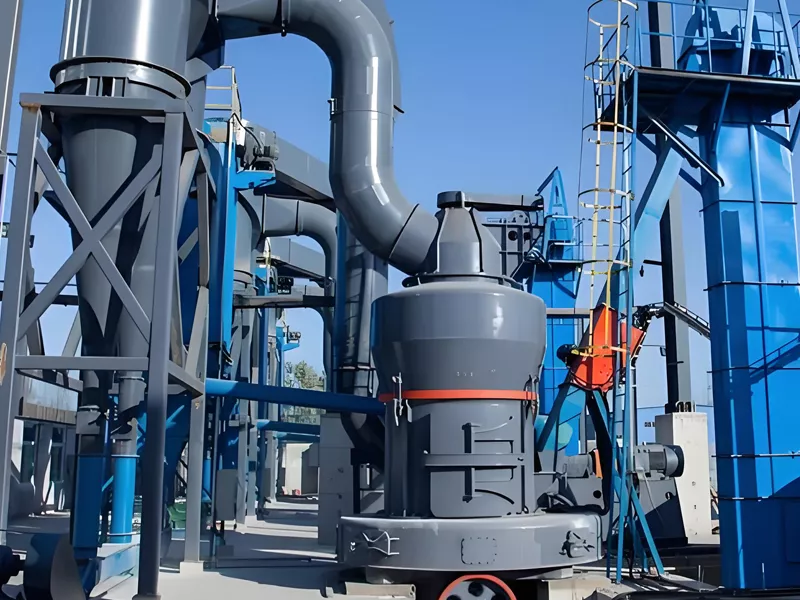
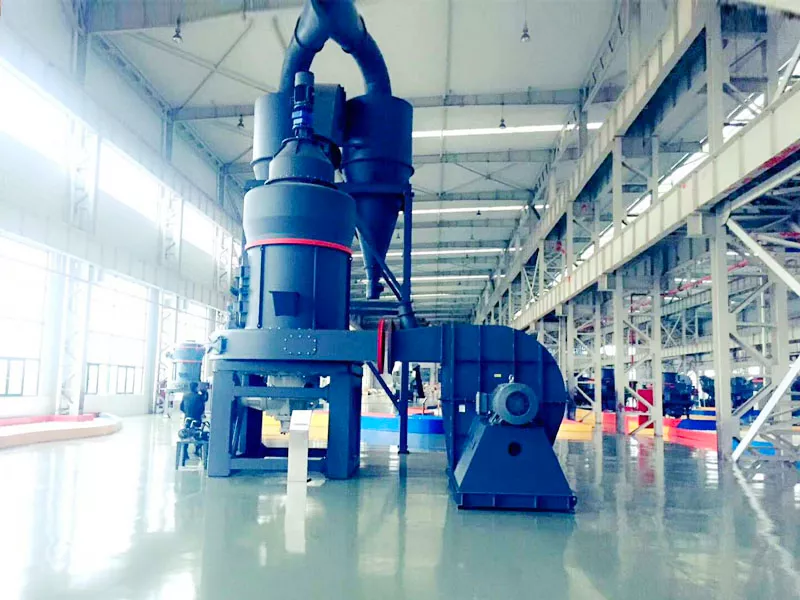
This comprehensive article provides an in-depth look at the Raymond mill, a versatile and widely used grinding machine. It covers the applications of Raymond mill in various industries, including mineral processing, chemicals, and construction, highlighting its ability to grind over 300 different materials with Mohs hardness ≤7 and humidity ≤6% to a fineness between 80 and 800 mesh. The article then delves into the structural features of the Raymond mill, emphasizing its compact design, reliable operation, and low failure rate. It explains the working principle of the mill, detailing the grinding process and the role of various components. The article also highlights the reliable quality of the Raymond mill, comparing it favorably to ball mills in terms of efficiency, power consumption, and initial investment. Finally, it provides essential maintenance guidelines to ensure optimal performance and longevity of the equipment. This article serves as a valuable resource for understanding the capabilities and operational aspects of the Raymond mill.
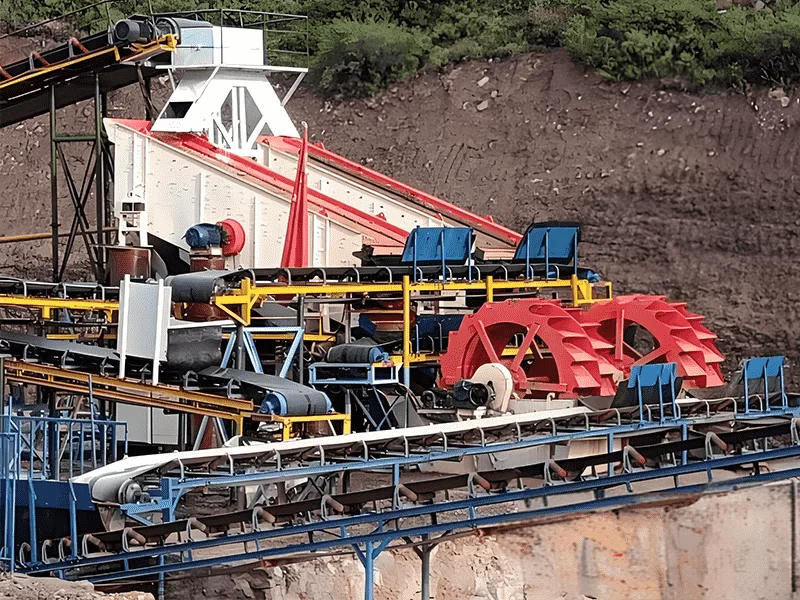
This article explores the crucial material requirements and their impact on vibrating screen performance. Key factors include moisture content, where external moisture affects flowability and can lead to clogging, especially in fine-pore screens. Clay content is another critical aspect, as materials prone to agglomeration, like clay, can cause screen clogging even with low moisture levels. Particle size characteristics, particularly the distribution of particle grades, influence screening efficiency, with pre-screening methods improving performance when fine particle content is low. Finally, density characteristics of the material, where differences in density between coarse and fine particles affect screening ease, are discussed. Understanding these material properties is essential for optimizing vibrating screen operation and achieving efficient separation results.

This website uses cookies
We use cookies to personalise content and ads, to provide social media features and to analyse our traffic. We also share information about your use of our site with our social media, advertising and analytics partners who may combine it with other information that you’ve provided to them or that they’ve collected from your use of their services.
Cookies are small text files that can be used by websites to make a user\'s experience more efficient.
The law states that we can store cookies on your device if they are strictly necessary for the operation of this site. For all other types of cookies we need your permission. This means that cookies which are categorized as necessary, are processed based on GDPR Art. 6 (1) (f). All other cookies, meaning those from the categories preferences and marketing, are processed based on GDPR Art. 6 (1) (a) GDPR.
This site uses different types of cookies. Some cookies are placed by third party services that appear on our pages.
You can at any time change or withdraw your consent from the Cookie Declaration on our website.
Learn more about who we are, how you can contact us and how we process personal data in our Privacy Policy.
Please state your consent ID and date when you contact us regarding your consent.